Skywatchers residing from the Mediterranean and Eastern Africa, all the way to East Asia are in for a treat this coming June 21st. An annular solar eclipse is set to occur on this day, which will be first visible during sunrise in Central African Republic. The shadow will then travel across the eastern part of Africa, and then cross several Middle-eastern countries by mid-morning. Among the countries it will pass through in the Arabian Peninsula are Yemen, the southern border of Saudi Arabia, and Oman. The lunar penumbra will then cross the Gulf of Oman, and make landfall in Pakistan, then crossing over to India, where the site of maximum eclipse will be experienced, a spot in the high mountains of the Himalayas very near the India-China border. This means, observers in the area will experience the longest period in which the moon’s disc will be inside of the sun’s diameter. From there, the moon’s shadow will then slide across China, then cross Taiwan and head on to the Pacific Ocean.

There will be plenty of viewing opportunities for people living in areas where the lunar penumbra or partiality, will pass. This means they will be seeing the sun appearing like a half-moon, because the moon will be partially blocking it (see Figure 2).

However, those who will be along the line of the penumbral midpoint will see the moon’s disc cross directly in front of the sun. Now normally, if this was a total solar eclipse, this moment will be marked with a dramatic change of lighting—the sky will go dark as night, and for a brief period of a few minutes, one will be able to see the Sun’s beautiful Corona or outer atmosphere. But this eclipse is not a total one. Why is that so? This has something to do with the variation of distance of the moon from the earth as it goes around our planet in its orbit.
Sometimes the moon is closest to the earth. This point in its orbit is called the perigee or periapsis. At other times, the moon is further away than usual, and this is called the apogee or apoapsis. In the upcoming solar eclipse, the moon is a little further away than usual, and thus its “face” or disc will be smaller in diameter compared to the sun. This further implies that most of the sun’s edge will still be visible even if the moon was exactly positioned or aligned with its center.

Annular eclipses are less dramatic than total solar eclipses, but this doesn’t mean that it’s no longer a sight worth experiencing, observing or recording. When the moon is at apogee during an annular eclipse, the sun peeking out at the moon’s edges will produce a thick ring (see Figure 4). However, this coming annularity is such that the moon is only a little bit smaller than the sun’s disc. This means it will produce a very thin solar ring, which would be very interesting to view and quite challenging to take a photograph of, because you would have to be standing exactly at the penumbral midpoint to see the full ring effect. There will be opportunities for this spectacle in some parts of Yemen, Oman, Pakistan, India and China.

For Oman, the best place to view the event will be in the Qurayyat Region southeast of Muscat, and the best time to start observing would be around 8:00 AM local Oman time.

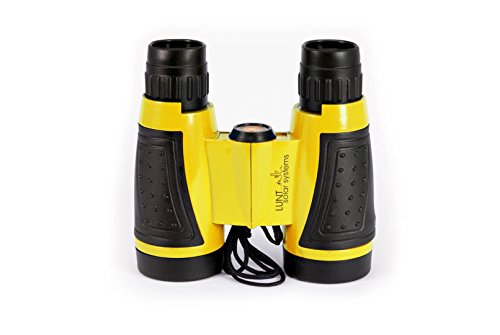
Don’t forget to use the proper solar filters for your observation and photographic equipment, and if doing direct observation, please utilize safe methods to observe. We at Astronomical Solutions Company have a variety of items in our inventory suitable for the upcoming eclipse, but if you do plan to order, please do it now, because the event will be in June 21st and you should incorporate the time to ship products to your locale should you wish to order items for this exciting event.